How Does an AI Kundli Work? A Simple Guide to AI Vedic Astrology
By Suraj Ahuja · Founder, FreeAIKundli · 18 September 2026
If you have generated a kundli online, you may have wondered what actually happens after you enter your date of birth, time of birth and birthplace.
A traditional kundli is calculated from astronomical positions and then interpreted according to Vedic principles. An AI kundli adds a layer: the software can explain that chart conversationally and answer questions about the specific placements in it.
There is one distinction that matters more than any other, and it is the reason this article exists. An AI should not be guessing the planetary positions in your kundli. The chart should be computed from astronomical data first; the AI should then explain what those computed placements mean. Calculate first, interpret second. That order is not a technical detail — it is the difference between a reading about your chart and a reading about nothing.
What an AI kundli is
An AI kundli is a Vedic birth chart combined with software that can discuss it in ordinary language. The chart itself contains the same things it always has: your ascendant (Lagna), Moon sign (Rashi), nakshatra, planetary positions, houses, yogas, dashas and doshas.
What changes is how you reach that information. Instead of receiving a long report and searching through it, you can ask what your tenth house says about your career, which planets influence your marriage, or what mahadasha you are currently running — and get an answer about your chart rather than a paragraph about your Sun sign.
Stage one: your birth details
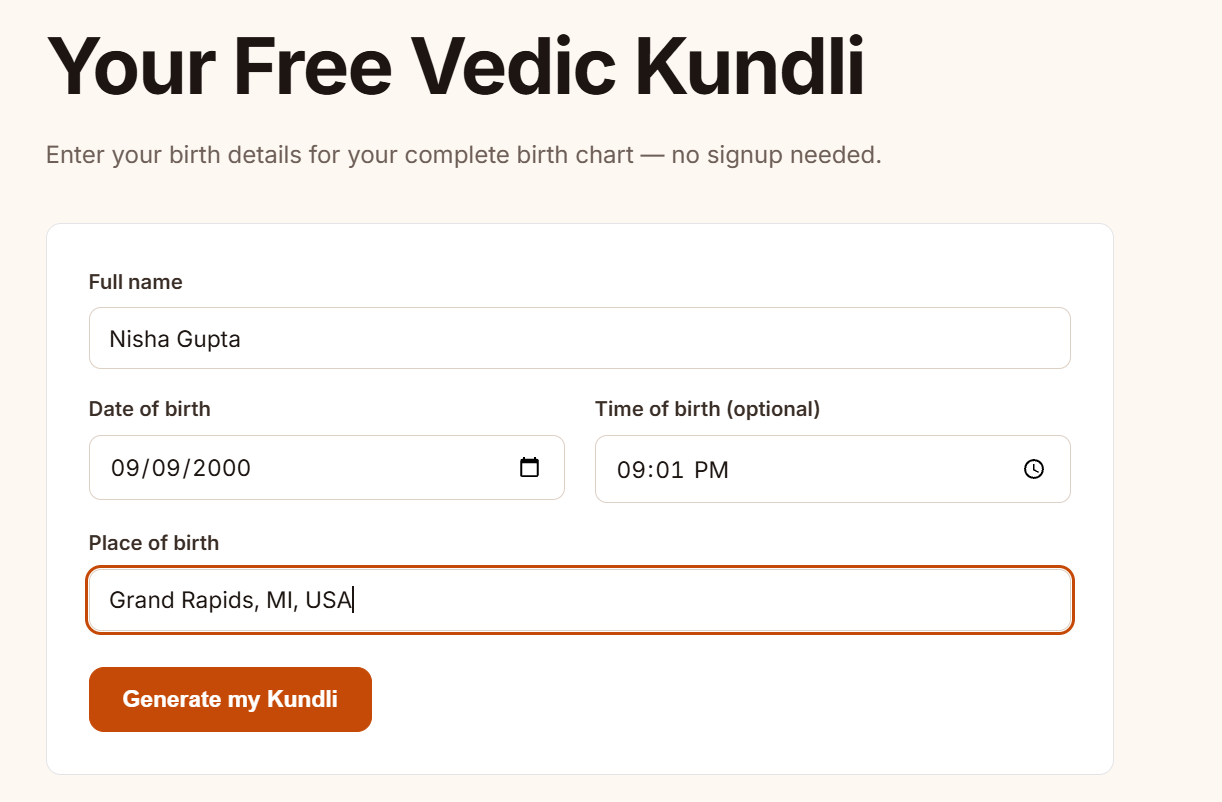
Three coordinates: date of birth, time of birth, and place of birth. Nothing else is required and nothing else is asked.
Birth time carries more weight than most people expect. The Lagna moves through all twelve signs in twenty-four hours, so it changes roughly every two hours — two people born the same day in the same city, hours apart, can have different ascendants and an entirely different house structure. If you do not know your birth time, the chart is still worth generating: your planetary positions by sign, your nakshatra and your dasha timeline all depend on the date rather than the hour. A chart that quietly guesses is worse than one that says what it does not know.
Stage two: the positions are calculated
This is the mathematical part, and it is where an AI kundli either earns its name or does not.
The software computes where each graha stood at that moment and place, against the sidereal zodiac, and builds the chart from those figures. On this site that is done by a deterministic astronomical engine using the Lahiri ayanamsa — the sidereal correction adopted as the Indian national standard. The same birth details produce the same chart every time; you could regenerate it in a year and the positions would be identical.
A language model asked to produce planetary degrees will produce confident, plausible, wrong ones. It is the single most useful question to ask of any AI astrology service: where do your numbers come from? If the answer is unclear, the reading may be fluent and still describe a chart that does not exist.
Stage three: the chart is interpreted
Once the chart exists, the interpretive work can begin — houses, planets, signs, nakshatras, yogas, dashas and the relationships between them.
This is the part that has always needed a person, and it is the part an AI can genuinely help with. Knowing that Saturn in the tenth house means one thing in a chart where Saturn is dignified and something quite different where it is not, and holding several classical opinions in mind at once, is interpretation rather than calculation.
It is also where honesty matters. Where classical sources disagree, a good reading says so rather than picking whichever version sounds most impressive. Yogas are worth reporting alongside how common they actually are — Gajakesari Yoga appears in roughly one chart in three, which is worth knowing before anyone tells you it makes you exceptional.
Stage four: you can ask follow-up questions
This is the part that is genuinely new. A traditional online kundli gives you dozens of pages. A conversation lets you ask what a placement means for your career, then what it means for starting a business, then which period matters most — with each answer connected to your chart rather than restarting from your sign.
On this site the chart travels with the conversation, so the astrologer already has your placements before you ask anything. You are not spending your first question re-entering details you have already given.
Is an AI kundli the same as a traditional one?
No — though the difference is not where people usually assume. The birth chart itself can be calculated from exactly the same astronomical principles that traditional Vedic software uses. What differs is how the information is presented and explored.
| Traditional online kundli | AI kundli |
|---|---|
| Generates a birth chart | Generates the same birth chart |
| Written interpretations, fixed in advance | Conversational interpretation |
| Often a long report | Answers to the questions you actually have |
| You search through it | You ask follow-up questions |
| Static | Interactive |
| Assumes you know the terminology | Explains terms in ordinary language |
How accurate is it?
That question splits into two, and they have different answers.
Is the chart calculation accurate? That depends on the ephemeris, the birth information you provide, the location and time zone handling, and which ayanamsa the software uses. Those are technical choices with correct answers, and a service should state them rather than treating the chart as something a model can approximate.
Is the interpretation accurate? That is a different kind of question. Astrology is an interpretive tradition — two astrologers can read the same chart and emphasise different combinations. An AI has the same limitation, and no amount of fluency changes it. Readings here are presented as astrology for reflection rather than as certainty about the future, and anything claiming otherwise is selling something.
It is the same engine behind every tool
The calculate-then-interpret split is not specific to the main chart. Every tool on this site works the same way, which is why the answers stay consistent between them.
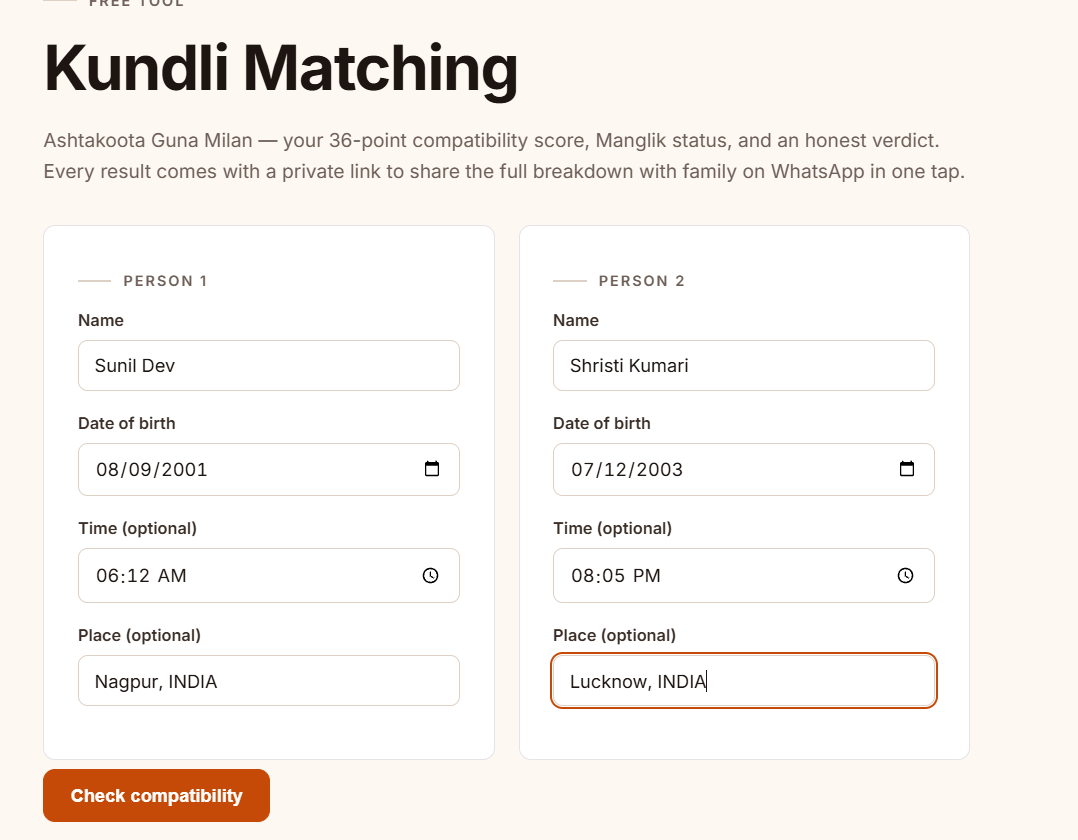
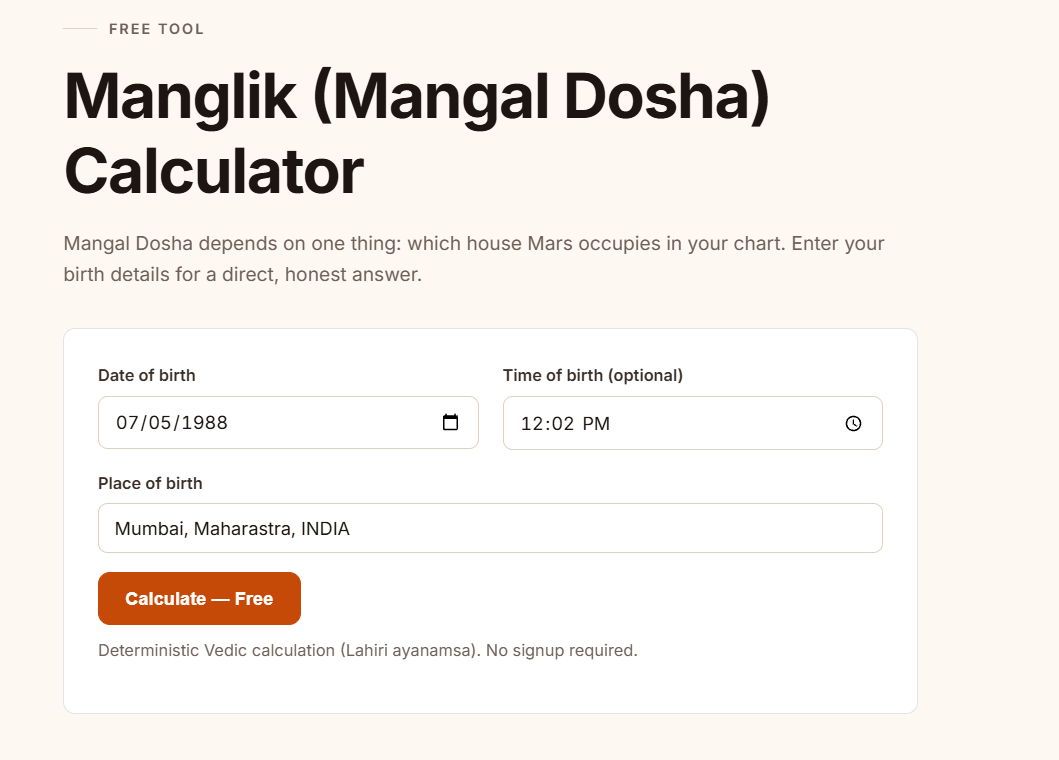
Kundli matching computes the thirty-six-point Ashtakoota Guna Milan from both charts, then explains what the score does and does not mean. A Manglik check comes down to one determinable fact — which house Mars occupies — so the tool answers that directly rather than hedging.
Mangal Dosha is the clearest example of why the split matters. It depends on a single placement, and the honest answer is either yes or no with the reason attached — not a warning followed by a remedy for sale.
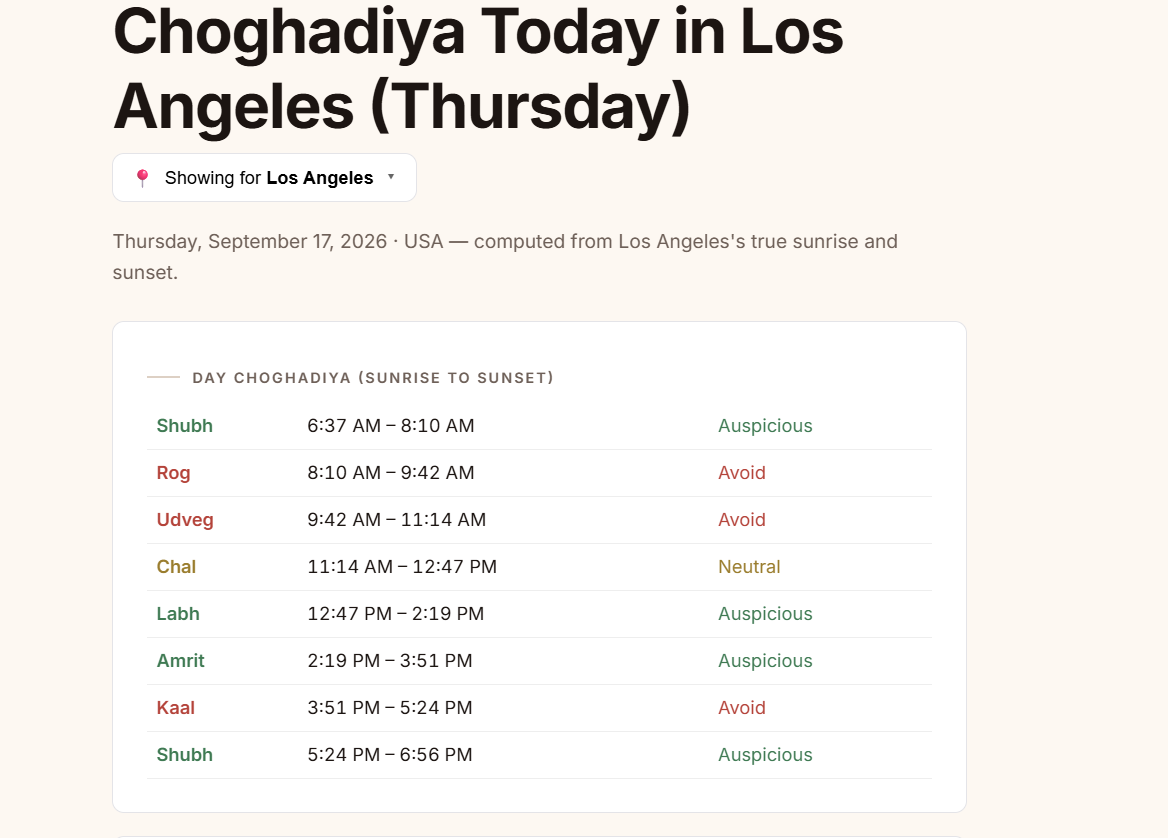
The same applies to the almanac. Choghadiya and Rahu Kaal are derived from true sunrise and sunset for a specific place, so they are genuinely different in Los Angeles and in Lucknow — a site showing Indian timings to someone in California is showing them the wrong thing.
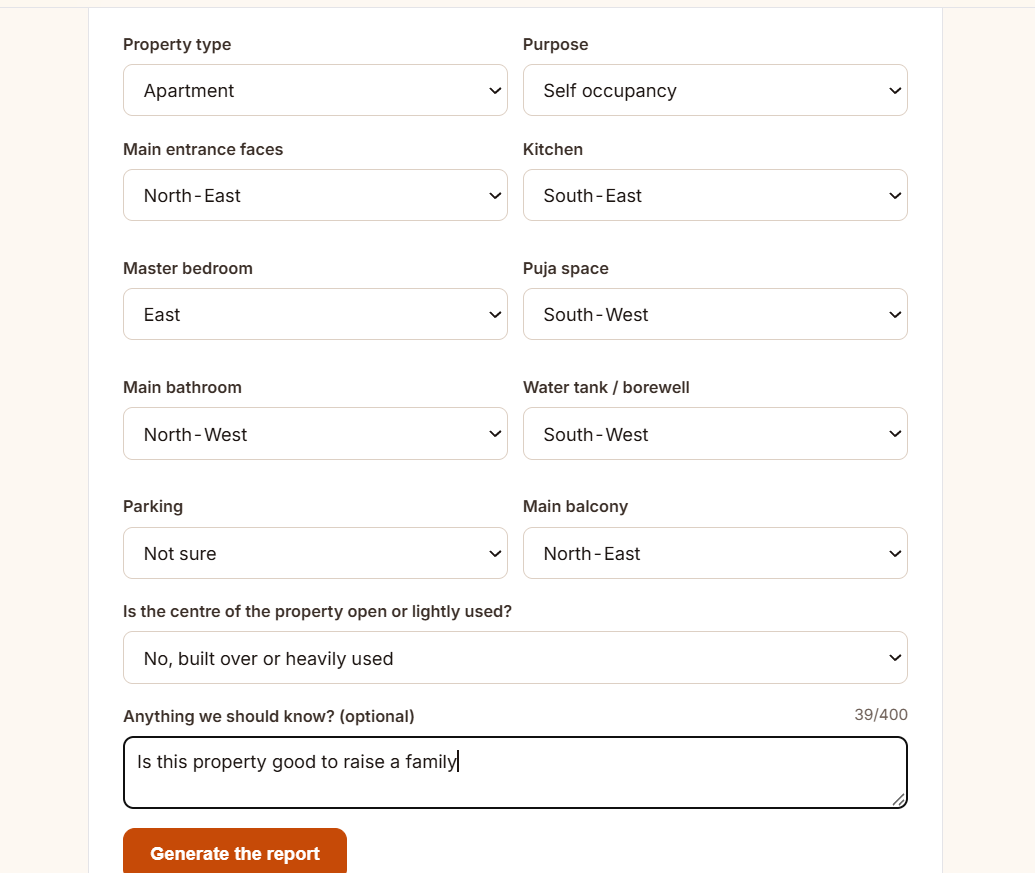
And where a subject is not astronomical at all, the input has to come from the person. Vastu depends on the directions your rooms face, which no engine can derive from a birth date — so the tool asks, and the reading works from what you tell it.
What to look for in any AI kundli service
Five questions, in order of how much they tell you. Does it actually calculate a birth chart, or is the model producing positions? Does it say where its figures come from? Can you ask follow-up questions, or is it a report with a chat window attached? Does it distinguish calculation from interpretation? And does it state the limits of both astrology and AI, or present a generated prediction as fact?
The last one is the tell. Any service confident enough to guarantee an outcome is either misunderstanding what it does or hoping you will.
Common questions
Is an AI kundli free?
On this site the birth chart, nakshatra, dasha timeline, matching and dosha checks are free with no account and no card. The AI astrologer gives one question without an account and five per calendar month with a free one.
Is AI astrology the same as Vedic astrology?
No. Vedic astrology is the tradition; AI is a technology used to calculate, organise and explain information within it. The tradition is not changed by the tool reading it.
Can AI predict my future?
No. It can explain what a tradition associates with a placement or a period, which is a different thing. Treat any guaranteed outcome as a sales pitch rather than a reading.
Does AI replace an astrologer?
Not for everything. An AI is available at any hour and costs nothing to ask, which suits exploring a chart. A complex or personal question is often better put to an experienced person, which is why this site also lists human astrologers.
What information is needed?
Date of birth, time of birth and place of birth. Time matters most for the ascendant and houses; without it the rest of the chart still works and the uncertain parts are marked as approximate.
What is the difference between kundli and kundali?
Nothing — they are spellings of the same word, both meaning a birth chart. Janam kundli and janam patri refer to the same thing.
Can I ask about my own chart specifically?
Yes, and that is the point. Once your chart is generated the conversation works from your actual placements — your seventh house, your dasha, your nakshatra — rather than from your Sun sign.
The full explanation of what a free AI kundli is, what birth details it needs and how the Vedic and Western zodiacs differ — the reference page for everything above.
Free AI Kundli, explained →What is today doing in your chart?
See today read against your own birth chart — where the Moon sits relative to your birth Moon, and the planetary period you're running. Takes a minute, no signup.
Deterministic Vedic calculation. Nothing is stored unless you choose to save it.
Generate your free Kundli
Lagna, Moon sign, Nakshatra, all nine planets, and your current Mahadasha — explained in plain English. Free with an account.
For entertainment and reflection — not a substitute for professional advice.